All posts by michaelbrummett

Lessons in Seeing….and Thinking

If you want a valuable lesson in art, get ye down to the Littman Gallery on Portland State University’s campus. Until March 26 they are displaying preparatory sketches that Picasso did for his famous Guernica painting.

These are the fascinating shows to see because they reveal how artists use art to think. You can witness his ideas take shape as he plays around with variations on several themes within the painting. You can also see alternate possibilities for how he chose to organize the painting into a unified whole. And, invaluable to the novice, you can witness the fact that even though it is not ‘realistic.’ the artist meant it to be that way. It was a lesson I learned while in college- also seeing a similar show of Picasso’s work. I noticed a drawing, very similar to this one:

The thing I noticed the most were the erased lines- the ghosts of paths not taken. In particular, the paths that were more ‘realistic.’ You see, when I looked at a strange looking abstract painting and some critic or teacher said the artist meant it to look that way, I thought they were full of crap. Until I noticed Picasso- taking a picture that was ‘right’, erasing it and making it abstract- or even if his original version was abstract- there was still the conscious choice to make it different. It was an eye opening experience. Unfortunately the gallery is closed on weekends but they stay open until 7pm on Thursday evenings. I’d be happy to join anyone who wanted to go see it (but you’d probably have to bribe my wife to give me up for an evening away from the kids.)

Here is some stuff about me

Here is some stuff about me

My good friend Logan
tagged me with this one. So here goes…

Four jobs I have had in my life:
1. Pizza maker/delivery driver for Little Caesar’s and Round Table
2. Newpaper Delivery Man
3.'”Telemarketer’ for fundraising campaign for a ministry
4. Custom Framer at Michaels Arts & Crafts

Four movies I’ve watched more than once:
1. Star Wars
2. The Matrix
3. Dead Poets Society
4. Good Will Hunting

Four places I have lived:
1. Portland, OR
2. Lexington, KY
3. Florence, Italy
4. Malibu, CA

Four TV Shows that I watch
1. Mythbusters
2. Lost
3. Good Eats
4. Suite Life of Zach & Cody (can you tell I have kids?)

Four places I have been:
1. Moscow, Russia
2. Croatia
3. Il Pallo (spelling?) horse race in Siena, Italy
4. Mammoth Cave

Four people who e-mail me (regularly):
1. Melinda
2. Ike
3. iTunes New Music Tuesdays
4. Multnomah County Library (your holds are ready for pickup!)

Four of my favorite foods:
1. Spaghetti
2. Steak
3. BBQ Beef Ribs
4. Fajitas

Four places I would rather be right now:
1. Florence, Italy
2. In my studio
3. in San Diego seeing the Robert Irwin Retrospective
4. in Pomona California seeing the exhibition of James Turrell’s art

Four things I am looking forward to in the coming year (next 12 months):
1. Greater Financial Stability
2. A show at an art gallery
3. Starting a printing business with my wife
4. Seeing Saturn at an observatory on a camping trip with Adam Wolfgang and our boys

Four significant/memorable gifts I have received:
1. The Septuagint from my wife
2. money to pay Melinda’s legal bills
3. An air compressor from my wife and her parents
4. Trip to NY/Jackson Pollock Retrospective from my wife

Four Books that have impacted me the greatest:
1. The Circle of Innovation by Tom Peters
2. The Fifth Discipline by Peter Senge
3. Zen and the Art of Motorcycle Maintenance by Robert Pirsig
4. Visual Thinking or Art and Visual Perception (it’s a toss up) – both by Rudolf Arnheim

Four People who have changed my thinking and continue to do so:
1. Christ
2. My wife
3. my kids
4. Tom Sibley

Here is the deal. Copy it paste it on your blog and change the list if you are…
Adam Wolfgang, Ike Graul, Jeff Partian, Carl Flynn, Melinda Brummett

Chris Burden

I feel the true value of art is that it makes thinking visible. And once you can see your thoughts, or the the thoughts of others, then the process of reflection becomes easier because you can almost physically handle your thoughts, and explore their many implications, conclusions, sources and beliefs. So the artists that I will talk about most on this blog have been the ones that have helped progress my thinking and understanding. One such artist, to the chagrin of my wife, is Chris Burden.

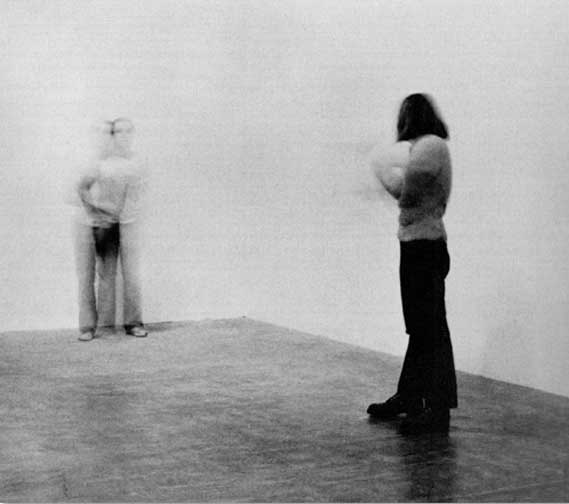
My wife is not too thrilled with this selection because she thinks he’s psycho- and truthfully she’s got a plausible case. Because, you see, Chris Burden made his big splash in the art world as a performance artist. One of his earliest pieces, his graduating show from UC Irvine, was a piece entitled “Five Day Locker Piece.”

He stayed, curled up, inside a locker for five days. He was in the middle locker, in the locker above him was a five gallon bottle of water, in the locker below him was an empty five gallon bottle (as you can imagine, by the end of the five days the fill/empty ratios of the two bottles were reversed). But his most famous performance piece, the one that really put him on the map was a piece called “Shoot.”


Viewers came to a gallery and witnessed the following scene: Chris Burden comes out along with a friend who is carrying a gun. They stand and face each other about 15 feet apart, when the friend takes aim and shoots Chris Burden in the arm. Chris Burden is taken to the hospital. The piece performed; the show is over. Raise your hand if you agree with my wife.

So here’s the deal- I think there is actually some profound learning that can take place when we open ourselves to the lessons. But in the interest of trying to make my posts a little shorter, I’ll break the lessons up into 3 parts. This first part will talk about performance art in general. Part 2 will relay the sudden insight I had that led to my appreciation of Chris Burden’s work. The third part will continue a look at his art -but the stuff that is less violent (he no longer does performance art).

Performance art. Many may think it is new fandangled. A creation of the wild times that were the ’60s and ’70s. Surely there were drugs involved. But I would make a case that it hearkens back to a much more primal time in human existence. A time that we can travel to…in the Bible.

Take some fun passages from Ezekiel 4-5, for example. Here the prophet is asked to build a model of the city and then ‘play war’ against it (incidentally Chris Burden did a similar play act of war, as well as made miniature model sculptures of societies at war), lie on his left side for SEVERAL days (like, almost a year), then cook food over a fire fueled by poop, and finally burn, scatter, or chop up with a sword his locks of hair. Or one of my favorite performances from Isaiah 20 where he went around for three years au natural (or at least in his underwear). Or Hosea whose marriage was actually a sermon, rather than a relationship. Art conveys a message as well, and performance art can be just as impactful as a prophecy from God. And that’s the essential thing- it’s impactfulness. Anybody can fall asleep during a sermon or a lecture, or pass by a painting or a sculpture without giving it a glance. But heads turn when people are nude; they gawk at shootings and roadside accidents; they talk about people and their interesting spouses. It’s hard to ignore. How would it impact you if you saw one of Chris Burden’s performances? Or better yet, what if you participated- like the time when he took up residence in an elevator, provided a bowl of pushpins, and posted a sign inviting riders on the elevator to push the pins into his body?

So performance art may be weird, but it is not new. It may make you uncomfortable, but it gives you an opportunity to think exactly why it makes you uncomfortable, and therein may lie the message- something may need to change. And that change may need to be you.

Marriage and Divorce: Is That the Real Question?

Ike was out of town this weekend…so he asked Adam Wolfgang to come visit and preach. Thursday I got a call from Adam- “I have every intention of making it this weekend, but we have a ton of snow out here and we’re supposed to get more. Could you come up with a back-up sermon just in case?” I called him back again on Saturday…. and had to leave a message as he was outside, shoveling snow….

Here’s what I think God wanted me to say.

It can sometimes be a scary thing, when you come in to preach on a predetermined course. You can’t pull out your best sermons, your greatest ideas, your favorite scriptures that you have nailed down in pretty display cases. No, when the verses are laid out for you- you have to take what you’ve been given, grapple with a text that may not even be on your radar. You may have to open yourself to what God is saying to you. I thought is was sheer brilliance when my home congregation was looking for a preacher once, and they held the incoming candidates to the schedule of passages that we were working through (I want to say it was the Gospel according to Mark)- so even potential hires could not put on their best airs- and had to contend with passages that may or may not have been conducive to great sermons.
On the plus side- nothing gets overlooked. I remember reading a comment from a minister who liked liturgical schedules because it forced you to deal with texts that you would have otherwise avoided. Topics that you didn’t want to approach for fear of offending someone. Or conundrums for which you had no easy answer, not even a complicated, convoluted answer for that matter. And so here I am before you, having to say a few words on the topic of divorce. But I feel the Lord has been merciful, and provided a way out. So let’s read Matthew 19:1-12 and see if we can’t figure out what this is all about.

So let’s just break this passage down and see what’s going on. First of all it begins with the phrase ‘after Jesus finished saying these things…’ which if you’ll remember is a marker that Matthew uses to break the teaching material up into five sections, presumably to connect Christ’s teachings with the five books of the Law. So we are now entering into the fifth block of teaching and narrative material that will culminate in the Passion narrative- His death, burial, and resurrection.

Then we have the basic structure of the Pharisee’s question, Jesus’ anwser, the Pharisee’s counterquestion, Jesus’ counteranswer, then the disciples get involved, and then Jesus’ conclusion as a response to their insight. So let’s explore this piece by piece.

The Pharisee’s question- the first thing I want to know is how is this question a trap? What are the issues here? Perhaps there’s more to it than this but here’s how I see it. It’s really a no win situation. God is obviously against divorce, they know it and we’ll get into specific verses here in a bit but basically we can take that position. However, Moses, as we’ll see in a little bit with their counterquestion, at least allowed the possibility of divorce. Now Moses was a pretty special guy. The book of Deuteronomy ends with saying that there was no other prophet like Moses whom the Lord knew face to face. In other words- while God spoke to other prophets in dreams and vision, or disembodied voices- God came down and spoke face to face with Moses- or as face-to-face as possible since nobody can actually look into the face of God without dying. but still, it was pretty safe to assume that anything Moses said was from God because they were that close. So the issue is that you really can’t choose sides between God and Moses- so any answer that Jesus gave could be countered pretty convincingly by the other side. It was a question no one could answer and their plan was probably to show that Jesus was nobody special and thus discredit him in the eyes of the people.

So Jesus’ answer at first seems like the best place to start- at the beginning. He appeals to the creation of marriage in the first place- with the creation of Adam and Eve in the Garden. And so the Pharisee’s think they have Him- “Aha- what about Moses saying you can simply write a certificate of divorce?” The ‘trap’ is springing? You can just imagine the other people around saying, “ooh, they’ve got a point you know. Why would Moses allow that?”

Jesus’ answer is interesting for a couple of reasons: For one-I don’t know why Jesus didn’t enlist more scriptural support. Malachi 2:16 comes straight out and says “I hate divorce” says the Lord God Almighty. That seems pretty clear to me. But Jesus decides to turn it around and make it personal. Up until now the discussion has been theoretical- a hypothetical man hypothetically married to a hypothetical woman. But Jesus now turns it around to them and says, “Moses gave a concession for YOUR wickedness and hardness of heart.” And here’s where it gets interesting. So let’s take a look at the passage of Moses allowing divorce that they’re referring to. Read Deut. 24:1-4.

Now wait a minute. As far as reasons go for divorce, this verse is pretty weak. It’s not even allowing it per se. It is not giving a provision that states if you’re upset with your spouse you may go to the priest and he’ll write a certificate of divorce and then you make a sacrifice and… no- there is nothing like that. It’s a total hypothetical situation- if a man gives his wife a certificate of divorce and then so on and so forth…It makes me want to compare the Pharisees with this guy in Deuteronomy. This guy finds something wrong with his wife- for whatever reason. He judges her and casts his judgment in the form of a divorce. What reason is there to determine the reasons for a divorce other than as a form of judgment? Whether you’re judging someone else or judging yourself- making sure you’re still ‘Ok’ even if you have a divorce- the emphasis is on judging what we, as people, do. And we jump on the little provision that Jesus gives- the clause about marital infidelity. “See, Jesus said we can get divorced if our spouse has been unfaithful!” But look again. Jesus never said that- he just said that we would not be guilty of adultery, but he hardly gives permission to divorce, just as Moses wasn’t really giving permission to divorce either. Jesus refuses to get caught up in a definition game of what we can and can’t do under certain circumstances. Instead he points to something else.

But first, the disciples jump on this bandwagon, too. And their conclusion is a little quirky. After Jesus’ statement my mind thinks, “Well, then I shouldn’t get divorced.” The disciples go a little extreme and say “Well, we shouldn’t even get married, then, in the first place!” Which, by the way, would probably be considered a very good, Pharisaical answer. The law had gotten so convoluted because over the years they’ve put hedges up around the original law so they were sure not to sin. So when you’re allowed to flog someone 40 times, you stop at 39- just in case you miscounted. So here, if you want to avoid committing adultery by remarrying after a divorce, don’t even get married in the first place and you’re certain not to get a divorce. Makes perfect sense, right?

What got me was that Jesus actually agreed with them. He basically says, “If you can handle that truth, it’s because God helped you accept it.” Then he launches into these statements about eunuchs. Now being a somewhat educated person, I basically knew what a eunuch was but wanting to give a thorough exposition on this text I decided to look the word up in the dictionary. And while its meaning has extended to include celibacy, historically its been accompanied by physical, surgical methods to help you keep with your decision- if indeed it was your decision. For one of the statements that Jesus makes is that some have been made eunuchs by others- and indeed, there were some jobs- often either a personal assistant to a member of royalty, or as a servant in a king’s harem, where it was required to undergo a medical operation to ensure you won’t overstep your bounds, so to speak, in your professional role. So Jesus covers the whole gamut of methods of refraining from marriage and it’s physical manifestation- either you’re impotent from birth, you’ve been made that way by someone else, or you’ve decided for yourself to devote yourself exclusively to God’ Kingdom- and if you’re cool with that- that acceptance – comes from God. And that’s when it hit me. Both the Pharisees and the disciples were concerned about our actions- what can we do or not do? Jesus focuses us on what God does. No matter what way one has become a eunuch, or even whether one becomes one at all, one’s acceptance of their condition is God given. And look back at Jesus’ first response to the Pharisee’s question- God created them man and woman. And ‘for this reason’ and man and woman become one- what reason is that? Simply this: that God said it was not good for man to be alone, and so God provided a helper. And what about our ‘out’- the provision of infidelity? Any good Pharisee would know God’s response to an unfaithful wife- He gave us a very concrete example of God’s actions. God told the prophet Hosea to take an adulterous wife, a wife who was a prostitute. Then in chapter 3 God tells Hosea, “Go and get your wife again. Bring her back to you and love her, even though she loves adultery. For the Lord still loves Israel even though the people have turned to other gods, …” We are still reminded of what God has done.

Paul, in Romans 12 says, “In view of God’s mercies, offer your bodies as living sacrifices…” Not in view of what we think it means to be a living sacrifice; not in view of a list of things we can or can’t do, or should or should not do. But in view of God’s mercies. And every Sunday, in communion, we are reminded of what God has done. Whether we choose to remain unmarried- God has provided Salvation. Whether we are married and remain faithful to our spouse- God has provided Salvation. If we are married to an unfaithful spouse- God has provided Salvation. If we are divorced- God has provided Salvation.

It’s not about what we need to do, or can do, or should do, or haven’t done- It’s about what God has done.

Richard Serra

I came to the realization that I haven’t talked very much about art on this blog- which is my life’s passion. So I’ve decided to do a small series on the artists that have affected me the most- not in any particular order though. So I’m starting with Richard Serra more because I found this about him on YouTube. He is absolutely amazing and if you get a chance to see any of his works- especially his large scale Torqued Ellipses, Spirals, or Toruses and Spheres- I think you’ll be extremely blessed by the experience (especially as you focus on the experience- the physical sensation of walking through ‘bizarrely shaped’ spaces). On a side note, I laugh at myself for having incredibly long posts so I found it all too amusing to post an hour-long video. For what it’s worth, I found some of the best info from about minutes 12-18, stuff around minutes 25-30, and the last 10-15 minutes to be more enlightening. Otherwise, grab the popcorn….

A New Mind (Reconceptualization #2)

Paul admonishes us in Romans 12 to be ‘transformed by the renewing of your mind.’ It is with this goal in mind that I have sought to understand the basic tenets of quantum physics and Einstein’s relativity. It has to do with our foundation of knowing. You see, we all see things from a particular perspective. We even see the Bible and God’s instructions for our lives from our own perspective. So in order to ‘renew my mind’ and see God’s word in a fresh light, I’m checking out other foundations of knowledge from which to see things. (Although truthfully, I’m starting to figure out that perhaps the best way is to not have any foundation, or perspective, at all- a really frightening thing when you think about it!)

So anyways- back to the physics. I’ll continue my foray into E=mc2, trying not to get too deep into the technical aspects, but go just enough to glean some conclusions from it that will hopefully let us all see things a little clearer. As I mentioned before (see ‘C-Blog’ below) Einstein’s famous equation reads Energy equals Mass times the Speed of Light squared. Again, doesn’t sound too revolutionary but here’s where we’ll start to get into some of those ‘dangerous’ implications.

I’m sure everyone has heard of Sir Isaac Newton. Maybe you know he is often considered the father of Physics. Pretty much any physical science that you learned in school- things like momentum and motion and attributes such as mass and stuff like that- pretty much originated in the equations and laws of Newton. They seemed to explain everything- or at least provided the means to explain everything- and his equations always seemed to work. They worked for about 400 years. Then Einstein came along. (Incidentally, Newton’s equations still work for the most part, which is why we’re still learning them in school.) As indicated above by the italics, Newton’s laws have much to do about the Mass side of the equation. And despite the heady designation of being ‘physics’, it appears to be mostly common sense because Newton’s laws merely describe our everyday experiences with the objects around us. But what happens when our everyday experiences are….wrong?

Let’s put that on hold for a second as we consider the energy side of the equation. For the longest time there was a sense of something called energy but it was always in separate forms. There was heat, there was light, there was magnetic attraction, there were electrical charges- but nobody saw these as related; nobody had a unified concept of ‘energy.’ Then this guy named James Clerk Maxwell came along and discovered that Magnetic energy and Light shared similar characteristics and were essentially different forms of the same thing called ‘energy.’

So far so good? Ok- here’s where it gets kinda crazy. Newton’s laws didn’t always work out quite right- but that was because Newton’s laws were theoretical and based on what scientists refer to as an ‘inertial frame of reference’- basically a place that doesn’t move. You see, any experiment that we do on earth- is moving. We are spinning around an axis and careening along an eliptical path around the sun, at several hundred miles per hour. If only we could find the one place in the universe that did not move- or at least find our rate of speed in relationship to that ‘still’ place so we can adjust our equations to take that into account and then- voila- everything will fall into place.

Well, Maxwell’s equations describing the properties of energy provided hope. One of the implications was that the speed of light was constant. Cool- we measure the speed of light going with our direction of movement (thinking that it would measure slower as the measuring devices would be moving away from the light) and compare it with the speed of light going perpendicular (sideways) to our direction of movement and the difference will tell us exactly how fast our earth is moving and we’ll know what we need to factor into the equations. Right? No dice. It seems light was a little too constant- when they made the two different measurements, there was no difference. So either Maxwell’s equations, which were only 20 years old at the time, were wrong, or matter, that hard, immovable stuff that we hang our shirts on or rest our drinks on or, heaven forbid, walk on (multiple stories off the ground, even) moves, shrinks, or expands in ways that would crumple Newton’s laws, having lasted proof positive for 400 years, like a house of cards. Hmmm…. I wonder which one could be wrong?

Enter a new mind- Albert Einstein. He had the gall or the courage or the naivety to say, well, maybe everything we’ve thought all along is wrong. Maybe stuff isn’t as hard and as immovable as we thought. Maybe everything is moving and there is no ‘inertial frame of reference’- there is no single place where Newton’s laws are absolutely correct because there is no place that is absolutely at rest. So after accepting this possibility and applying a uniform change to some equations that then implied matter changes with movement, he culled it down to a simple elegant expression : E=mc2

So let’s look at what this means and then I’ll extrapolate on some broader philosophical implications on my next post. First, one of the proofs that made Einstein famous. Light is a form of Energy. Now, according to his equation, Energy has mass. If light has mass, then it can be affected by gravity. So picture this… or look at the picture below: Light traveling from a star will ‘bend’ or ‘curve’ around the sun because of gravity and thus will appear to us to be in a different location.

This was proven to be the case during a solar eclipse in 1919- a full 14 years after Einstein theorized it!! The thing is, though, it is so difficult to perceive the amount of Mass for a given amount of Energy because of c-squared. With c being an astounding 187,000 miles per second and then you square that- we’re looking at a HUGE number that you have to multiply with to get a relationship between Mass and Energy. So it explains why light, which is essentially pure energy, could behave like an object, a mass. But the reverse is also true- imagine how much energy would be contained in an object with a Mass great enough for us to measure. You can begin to understand how just one ounce of Uranium could cause the massive amount of destruction on Hiroshima in 1945. Yep- that was made possible through the understanding of E=mc2 and scientists figuring out how to release the enormous amount of energy contained in a lump of mass.

Art for Sale

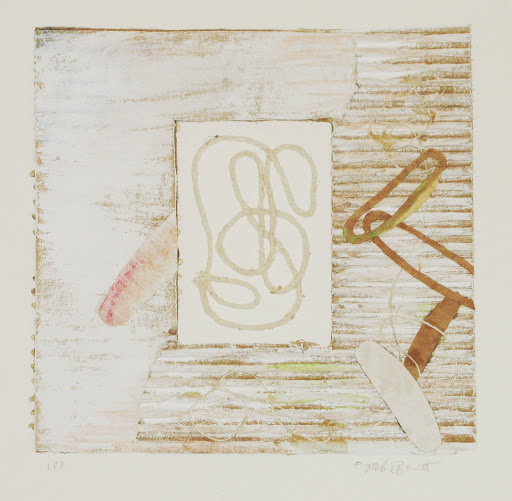
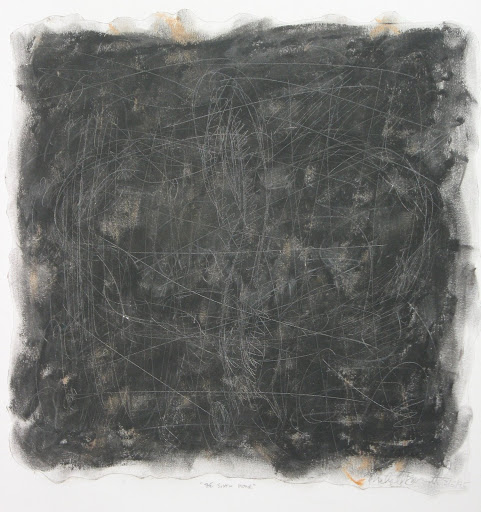
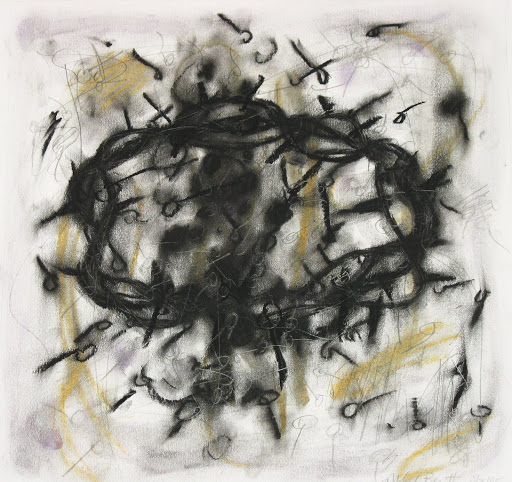
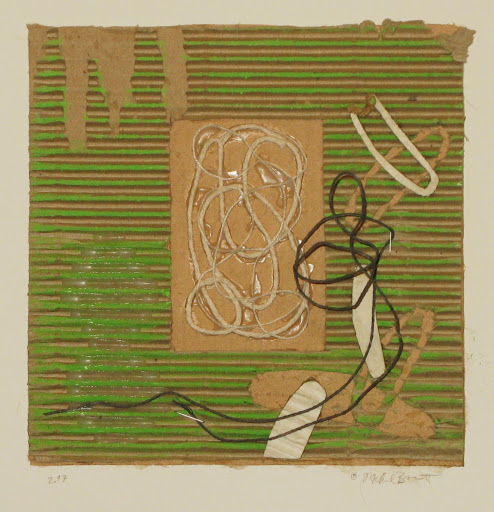
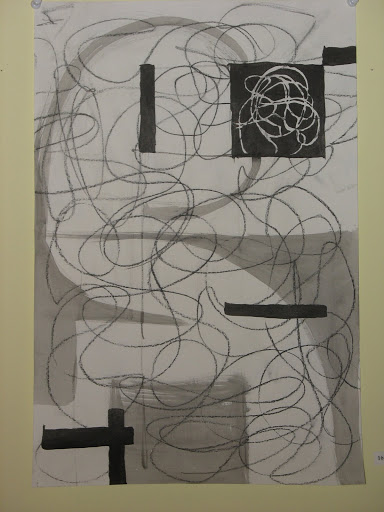
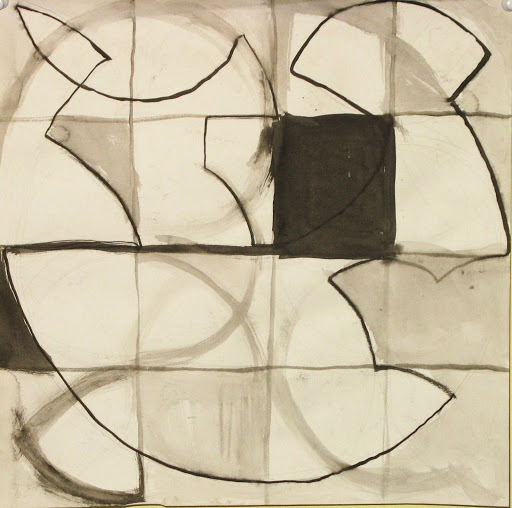
Melinda and I would like to thank everybody who came out and supported us in the Art Sale that we held to raise money to pay down some of the legal fines and fees that we’re faced with. And we want to thank you, those of you who were not able to make it but had mentioned you still wanted an opportunity to buy some of my artwork. So here it is- the remaining items that we have available for purchase. The works are priced at $75. They are all works on paper utilizing one or more of the following mediums: pencil, charcoal, pastel, oil pastel, and ink. If you are interested please shoot me an email (mvisible@gmail.com or sixbrummetts@gmail.com) and either describe the work you want (most of them don’t have titles) or just copy and paste the image into your email. Also, in addition to the works below, I am available for commissioned work like portaits. Once again, thank you and…. happy shopping!!


C blog

So Reconcepualization #1 begins with E=mc2. Particularly with ‘c’. But let me back up a bit. Almost everybody, I’m sure, has heard of E=mc2 – Albert Einstein’s claim to fame (well, not entirely- in fact he won his Nobel Prize in physics for something else, not this equation.) But what is it really about? In short it means that Energy is equal to Mass times the Speed of Light squared. Doesn’t really sound like a big deal does it? Again, sometimes it is not the idea that is disturbing but rather the implications of that idea that ruffle your tail feathers. However the full implications are for another blog. Here I want to look at ‘c’ and how a more complete picture of the nature of light and its speed has helped me better visualize the concept of faith.
The ‘c’ stands for either celeritas, the Latin word for light, or for constant because it is the peculiar fact that light travels at a constant speed that makes this equation, and its implications, so persnickety. What is so amazing about the speed of light being constant? When I’m driving down the freeway and maintaining a constant speed (the speed limit, of course) there is nothing particularly amazing about that. Ahh- but say you’re driving down a road at 30 mph and another car is driving toward you, also at 30 mph. It actually appears to you that you are being still and the other car is approaching you at 60 mph, right? Similarly, if you and another person are driving side by side, you’re going 30 and the other person is going 40- it appears that the other person is pulling away from you at a rate of 10 mph. Even if you didn’t know the exact math it’s just common sense that two cars moving toward each other would appear to be approaching faster and a car going faster than you would definitely be moving ahead of you but not at the full speed as if you were standing still. Truthfully, this is what relativity really is- and it wasn’t Einstein that discovered it- I think it was Galileo who first postulated it- some 400 years ago! Everything is relative to your vantage point- Go it? Okay.
Here’s the rub- the big thing with light being constant is that it appears to be the same speed no matter what your vantage point is. So let’s explore this in our car analogy only instead of cars, there is a beam of light. The speed of light is approx. 187,000 miles per second– yeah, a little fast. So say it is coming toward us and we are traveling toward it (just like two cars moving toward each other) at 100,000 miles per second. According to our analogy above the light would appear (ie. measure) to be approaching us at about 287,ooo miles per second. Nope- all experiments have shown it still measures 187,000 miles per second. Turn it around- we’re alongside the light, again going 100,000 miles per second, and so the light is ‘slowly’ moving ahead of us at a rate of 87,000 miles per second- right? Wrong again- when we look over at the light it shoots away from us at 187,000 miles per second, no matter how fast we’re going!!! So this speed, then, is a defining characteristic of light- in order for us to see light, it has to be moving at that constant rate.
As a visual analogy, say you had a jump rope and you wanted to see the oval shape that it made around a person while they were jump roping (jumping rope?)- It would be impossible to actually see that oval, let alone for the jump rope to even form that shape, unless it were moving round and round in constant motion.

So here are a couple of takeaways from this conception. First, I see in this scientific proof of an absolute. Philosophically people have pointed to “Einstein’s theory of relativity” as proof that ‘everything is relative’- ie. there is no absolute good, there is no absolute God. That’s a load of dookie. In fact, Einstein’s equation supplies the link that unifies everything that is relative, rather than relativising everything that was once thought absolute. I think that is an apt description of one aspect of God- that when we are on His wavelength (pun unintended but consciously kept once realized) we are able to see everything in its proper relation and perspective. God is the great unifying constant.

Second, it posits another scientific basis for the existence of something in terms of movement or action. Usually when we define something we describe things like height, weight, color, etc. Characteristics that are all static. Light’s description or definition requires its movement. Here’s where it hit home for me. We were in Life Group discussing a passage in Romans and Ike throws out the question “What is the difference between professing faith and having faith.” Well like any good church-goer my mind immediately jumps to the passage in James where he talks about faith needing to be active- bingo: faith has to be moving to exist. So maybe you can picture it this way. Imagine a repeating wave (you math types can picture, like, a sine wave)- in order for a wave to exist you need to have a travelling upwards to the ‘crest’ then back down then back up to the next crest and on and on and on. But to be a wave, which light is (sort of), this has to keep going, thus its constant speed. If faith is visualized as a wave, each wave crest is an ‘act of faith’, and so to maintain the wave there must be a continual stream of ‘acts.’ Now, I see professing faith as an act of faith, but left alone it cannot sustain itself. It’s like when you make a wave by snapping a rope or a garden hose; give it one snap and you have one crest of a wave that then peters out at the end. But if you continually snap it you have an ongoing wave that stays more or less ‘constant.’

Now here was the big insight for me, and the one that has the broader implications that are more difficult to deal with. Light is constant regardless of the situation, regardless of the frame of reference or vantage point. If faith is to be constant as well, it must be comprised of a continual series of acts that occur irregardless of the context in which they are performed. So we profess our faith by saying “Do not judge” until someone does something we don’t agree with, then maybe we hold back a little of our good cheer, or our help, or refrain from taking actions because it might appear that we approve of their behavior. We profess our faith by saying “repay evil with good” then someone maligns your spouse and suddenly grand visions of violent actions enter your brain, possible recourses from which to choose. We profess our faith by saying “let the little children come to me”, until one of those little children makes fun of your child, and suddenly your “inner child” wants to take over, armed with the knowledge that you are now much larger and stronger than when you were an actual child.

My actions toward others who harm me or my loved ones should not in any way arise out of that situation, or the memory of prior situations, or the possibility of future situations. Similarly, my actions toward people I like and love should not be based on my positive feelings for them. The ‘speed’ of my faith should be constant whether I’m in a car traveling toward someone or alongside them. It is constant. It is unaffected by frame of reference or situation. Faith in Jesus is dependent upon His actions. Just check out Romans 12- “Therefore, in view of God’s mercies….”

((( audiovita )))

I would like to take this opportunity to tell everyone (both of you) that I have a second blog site with a dedicated purpose. If you read my ‘100’ post below you will know that I have compiled a soundtrack of my adult life. I’ve decided to share. Each post will contain two or three songs that you can listen to and then an accompanying anecdote about my life in relation to those songs. I call it Audiovita.